Jodi Picoult is a bestselling author whose popular fiction has received accolades such as the England Bookseller Award for Fiction and the Sarah Josepha Hale Award. Picoult’s books often look into complex feelings and focus on contemporary issues rather than historical events.
Maybe who we are isn’t so much about what we do, but rather what we’re capable of when we least expect it.
— Jodi Picoult, My Sister’s Keeper
My Sister’s Keeper (2004) remains one of her most iconic novels, following a girl conceived to be a genetic donor for her terminally ill sister. Small Great Things (2016) is another acclaimed novel that tells the story of a Black nurse barred from caring for a white supremacist couple’s newborn.

Small Great Things
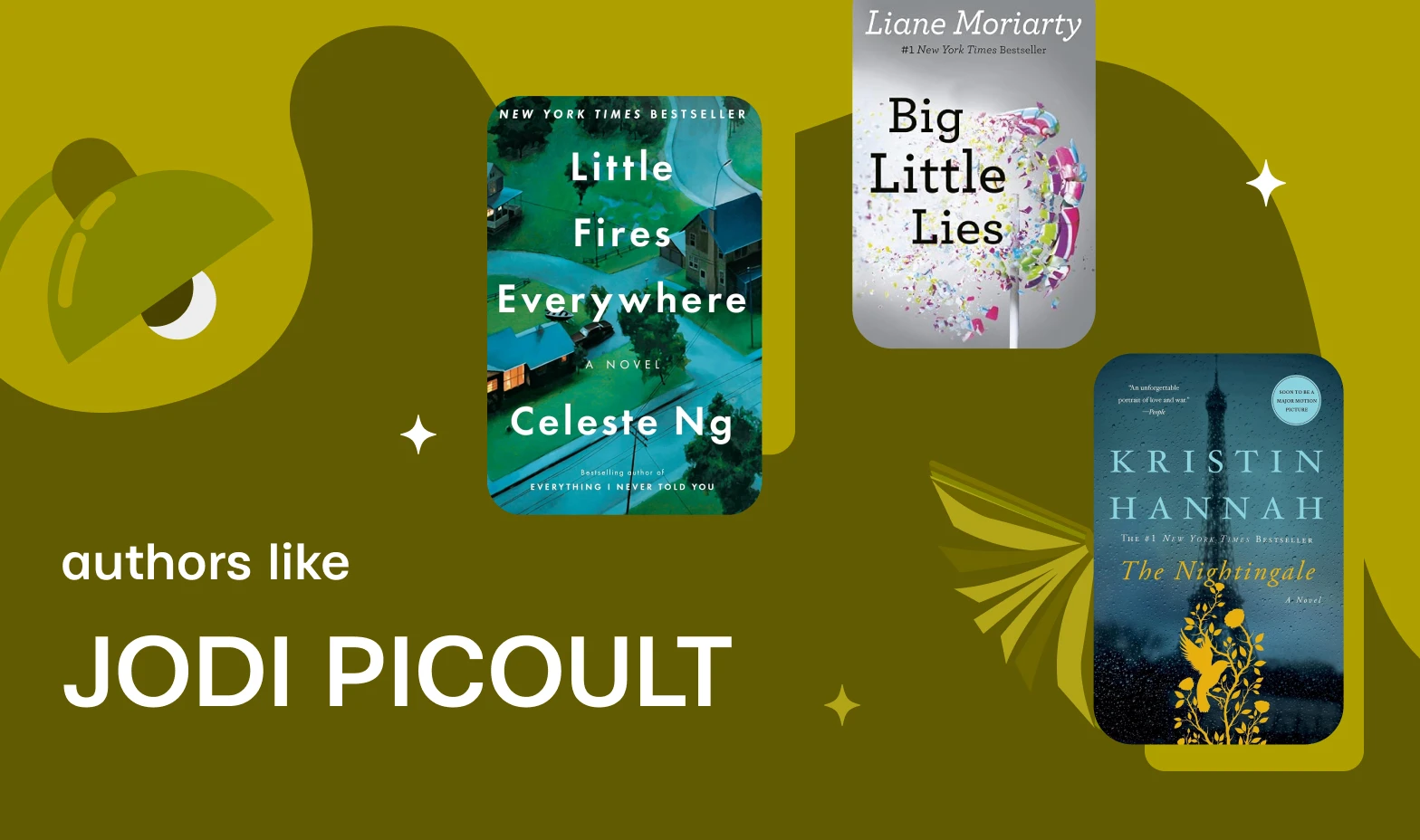
If you love Picoult’s books and need similar recommendations, try reading these authors:
1. Liane Moriarty
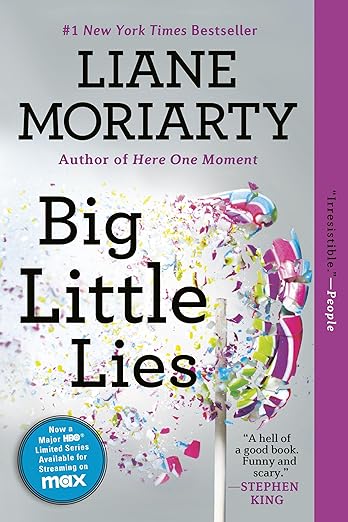
Australian author Liane Moriarty is one of the closest matches to Picoult when it comes to subject matter and storytelling structure. Moriarty has built her career around taking apparently ordinary families, marriages, friendships, and communities and revealing the tensions underneath them.
Big Little Lies
Her books include The Husband’s Secret, Big Little Lies, Truly Madly Guilty, Nine Perfect Strangers, What Alice Forgot, and Apples Never Fall. The Husband’s Secret became a #1 New York Times bestseller and remained on the list for more than a year.
Moriarty’s works are especially interesting because domestic life feels suspenseful in them. Penguin describes her work as exploring “quiet tensions” beneath ordinary lives, with emotional secrets, moral dilemmas, and flawed characters. Like Picoult, Moriarty is interested in the gap between what people intend and the consequences of their actions.
2. Kristin Hannah
Author Kristin Hannah is a well-known contemporary writer of historical and women’s fiction. Known for such works as The Nightingale, The Four Winds, and The Women, Hannah skillfully depicts deeply personal stories. Her unforgettable protagonists often find themselves in meticulously researched historical settings.

The Nightingale
Hannah’s personal history adds poignancy to her fiction: her first attempt at a novel was at her dying mother’s bedside in the hospital, and her 2008 bestseller Firefly Lane draws directly on her own Pacific Northwest childhood and college years.
Hannah is a natural read-alike for Picoult fans because of her method as much as her subject matter. Despite writing emotionally raw stories, Hannah describes herself as anything but a “freewheeling muse-driven writer.” She’s methodical, which she credits in part to her legal training, and she likes working from outlines and conducting dedicated research, much like Picoult.
3. Celeste Ng
Her debut became a New York Times bestseller and won the Massachusetts Book Award and Asian/Pacific American Award for Literature. Her works include novels Everything I Never Told You, Little Fires Everywhere, and Our Missing Hearts. Little Fires Everywhere became a #1 New York Times bestseller and was adapted into a Hulu limited series.

Little Fires Everywhere
Her books frequently use one family to examine a much larger social problem. Everything I Never Told You, for example, centers on the death of a teenage girl but gradually becomes a story about family expectations and the ways parents and children misunderstand one another. Ng describes it as exploring “family, history, and the meaning of home.” In Little Fires Everywhere, the conflict between two families serves as a lens for examining race, class, motherhood, identity, privilege, and the meaning of family.
Ng has spoken candidly about her deliberate and careful process of writing. She knows the core tragedy and spends the writing process discovering the why behind it, much like Picoult often works backward from a moral flashpoint to explore how ordinary people arrive there.
4. Nicholas Sparks
For readers who love Picoult’s emotional intensity and heartbreaking relationships, Sparks is the perfect pick on this list. If Picoult’s books make you cry because of moral complexity, Nicholas Sparks’s do so because of romantic inevitability. Nicholas Sparks’ books include such bestsellers as The Notebook, A Walk to Remember, Dear John, and dozens of others. Sparks has sold more than 130 million copies worldwide, with his books translated into more than 50 languages.
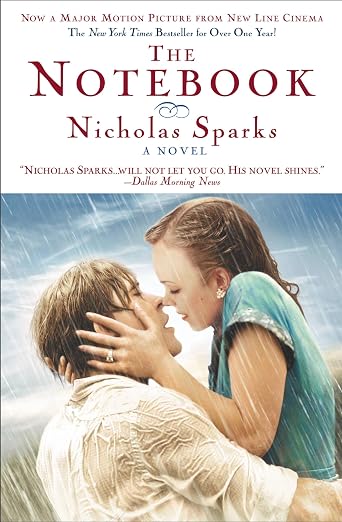
The Notebook
Sparks is more romance-forward, and Picoult is more issue/courtroom-forward, but the emotional engineering is similar. Sparks has laid out his own “three requirements” for a powerful story:
- genuine emotional impact without manipulation;
- drama without melodrama;
- characters and situations that feel universal and real.
The strongest overlap between the authors is the question of what we are willing to sacrifice for the people we love. Picoult’s My Sister’s Keeper asks how far a family should go to save a child. Sparks repeatedly asks variations of the same emotional question through romantic relationships: How much can love endure?
5. Jojo Moyes
Jojo Moyes (Pauline Sara Jo Moyes) is a British author best known for the book Me Before You. Another valuable read is The Giver of Stars (2019), a historical novel about a group of women who deliver books on horseback through Depression-era Kentucky as part of the real-life Pack Horse Library initiative. This novel combines friendship, social inequality, women’s independence, and historical drama.

The Giver of Stars
Interestingly, Moyes has pushed back on the idea that emotionally accessible “commercial fiction” is somehow less serious than literary fiction. This is a defense Picoult herself has made repeatedly across her career, given how often her books get pigeonholed for their popularity and readability. Many don’t know that, but Me Before You was written as a personal passion project after her previous eight books had underperformed.
Here is our recommendation: read Me Before You for emotional intensity, or The Giver of Stars for a story about women and social issues.
If you love Jodi Picoult, chances are you’re not looking for a particular genre as much as a particular reading experience. Instead of asking, “Who writes exactly like Jodi Picoult?” ask yourself, “What do I love most about her books?”
No two authors are completely the same, and that’s the beauty of reading. So we encourage you to find similar themes or literary approaches while keeping in mind each one’s uniqueness. Every single writer on this list builds stories around a difficult, often unresolvable dilemma, and they also do careful homework (historical, medical, ethical) before asking readers to feel something.