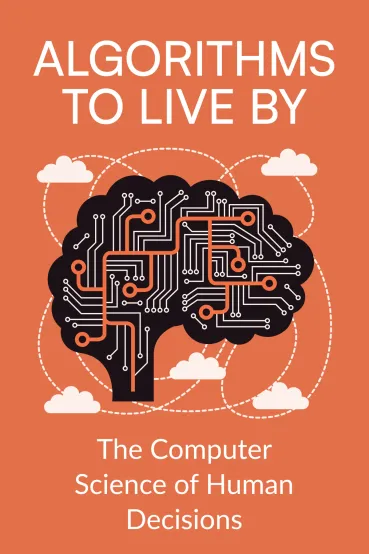
Algorithms to Live By
Brief Summary
Computer science concepts are deeply ingrained in our daily lives, whether we realize it or not. If you’re interested in understanding human memory, organizing your life more efficiently, or delving into the fascinating world of algorithms, “Algorithms to Live By” is a book for you! Both deeply knowledgeable, Brian Christian and Tom Griffiths break down complex ideas with remarkable clarity.
Topics
Key points
Key idea 1 of 7
Have you noticed how complicated it is to decide on something when there are many options? Scrolling through an endless list of things to choose from, we start wondering if the perfect choice is just one more swipe away. Some people spend years on dating apps, never quite fully committing to a choice. Others decline job opportunities, waiting for the best one to come. The problem is that we rarely get the chance to see all the options at once.
When every decision feels final, and every delay feels risky, it’s not surprising that this causes anxiety, which is the core problem of *optimal stopping*. Optimal stopping helps us rethink how we perceive choice. It teaches us to trust well-thought-out decisions instead of striving for perfect results. Knowing when to stop searching can help you accept your limitations. In a world where full certainty is rarely possible, this is the best you can do.
One of the many things computer science can teach us is that hesitation and impulsiveness are predictable risks. They are built into the decision itself. If you commit too early, you may miss something better. Conversely, if you wait too long, the best option may already be behind you. The question isn’t whether to balance these risks, but how to do so effectively.
Suppose you’re interviewing candidates and expect 100 people. Review the first 37 without making any selections, treating it as a period for observation and information-gathering. Next, choose the first individual who is superior to everyone you have seen thus far. This gives you the best shot at striking gold and finding the absolute best candidate.
Because it requires you to reject strong early candidates and make a commitment later, this strategy may feel uncomfortable. However, from a mathematical point of view, you have the best chance of selecting the best option. One researcher even used this for dating! He calculated that his “look but don’t leap” period should conclude at age 26, between 18 and 40. After that, he’d commit to the first person who’s better than anyone he’d dated before.
You may also like these summaries