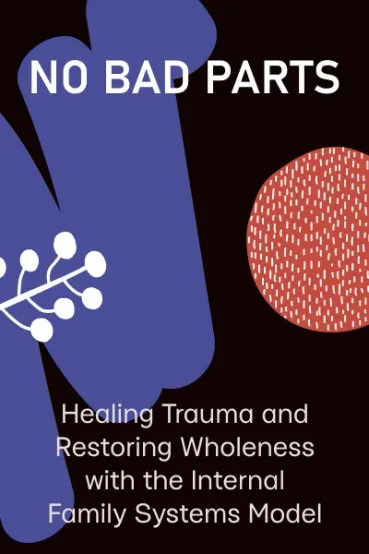
No Bad Parts
Brief Summary
“No Bad Parts” challenges the traditional “mono-mind” view by asserting that our psyches are composed of multiple parts. Its central premise is that there are no “bad” parts, and we need to understand even our most destructive impulses.
Key points
Key idea 1 of 7
Imagine being at a crossroads of an important life decision. When making your choice, one part of you would likely want to take the risk, while another would want to play it safe. This contradiction is completely natural, and, according to Internal Family Systems (IFS), reflects how the human mind works.
Dr. Richard Schwartz developed this system after noticing a repetitive pattern among many of his clients. They often sought therapy not because they had always struggled, but because their lives had suddenly fallen apart due to a heart attack, a divorce, or the loss of a child. Additionally, people who had considered themselves successful found that their old drive had disappeared.
Schwartz noticed something surprising while helping patients cope with uncertainty. Those painful moments created space for people to discover hidden parts of themselves. People kept striving, but they also reconnected with deeper relationships and a greater sense of purpose.
IFS suggests that instead of a “mono-mind,” humans possess multiple sub-minds or “parts” that interact. IFS calls it multiplicity. We all have parts that encourage us to be ambitious, cautious, playful, or self-critical. Sometimes they agree, and sometimes they compete for control. Many of us grow up believing we should suppress the thoughts or emotions we dislike, but those are completely normal.
Another key concept in IFS is the Self — a calm, compassionate, and curious inner presence that exists beneath our protective parts. One way of finding access to this Self is through “Mapping Your Parts.” Grab a sheet of paper and think about an emotion, thought, or impulse that feels important right now. Then notice whether another part appears. Draw that one too, and continue until you’ve sketched several parts that seem connected.
Once your map is complete, look at it and ask yourself: Which parts protect others? Do any of them argue or form alliances? How do you feel toward each of these parts? What might this inner system need from you?
You may also like these summaries