I have, more times than I care to admit, told someone I “didn’t have time” to do something after first scrolling through my phone for twenty minutes. I’ve kept a to-do list for so long that finishing three things on it only felt like proof of how much was still left. But things started to get better with the help of expert authors I’ve read.
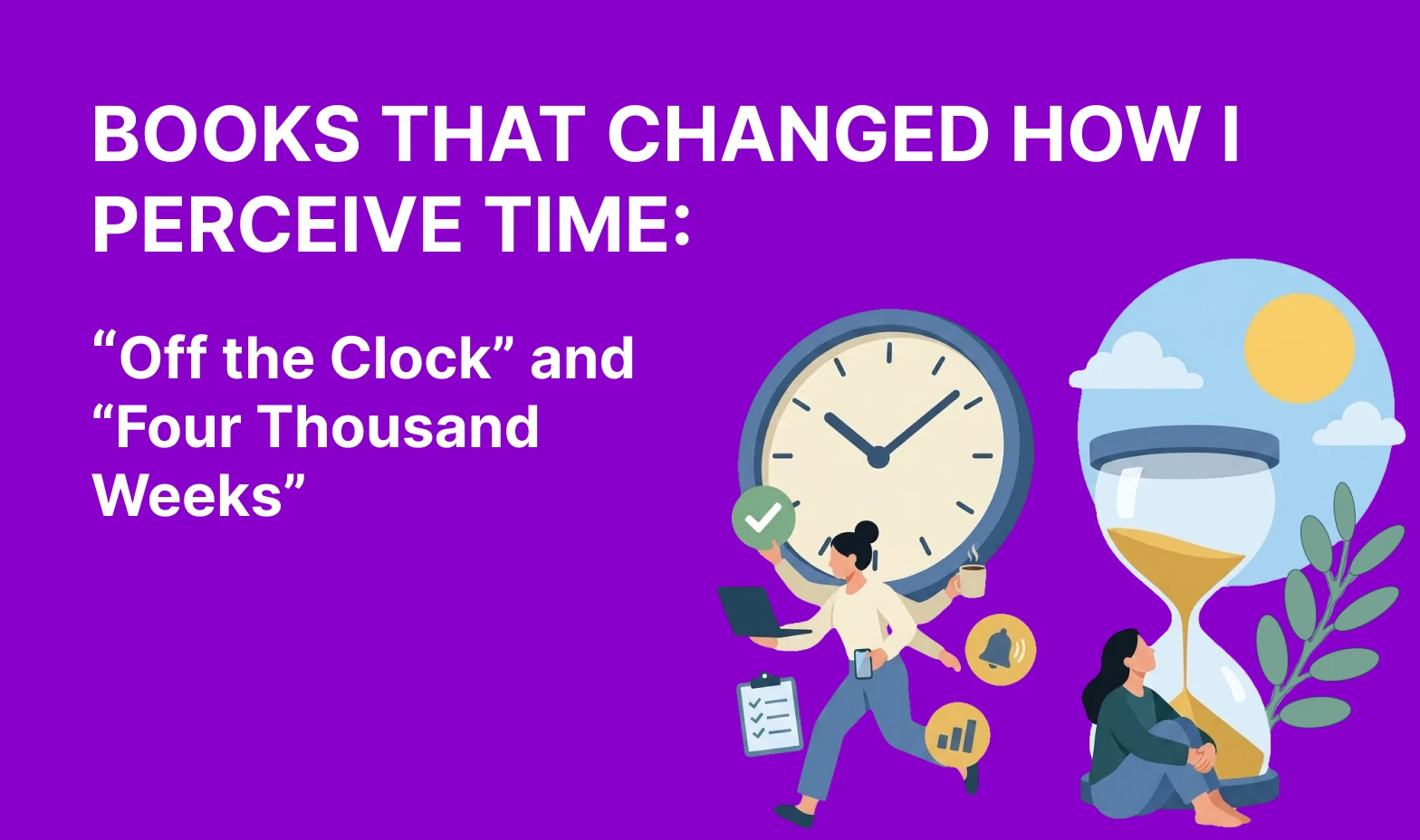
Laura Vanderkam’s Off the Clock and Oliver Burkeman’s Four Thousand Weeks start from almost opposite premises. Vanderkam’s case is that most of us have more time than we think, but we lose track of it. Burkeman argues that our time is almost insultingly short, and that no amount of optimization will ever be enough. Surprisingly, reading them back-to-back gave me tools and the permission to stop feeling guilty.
Being off the clock implies time freedom, yet time freedom stems from time discipline. You must know where the time goes in order to transcend the ceaseless ticking.
— Laura Vanderkam, Off the Clock
Your perception of time is often wrong
Laura Vanderkam, known for her writing on time management, decided to keep track of all her hours for a full year. Vanderkam was surprised to discover a ten-hour difference between the week she thought she worked and the one she actually lived. Her fifty-hour weeks had always seemed normal to her, but the forty-hour ones were closer to the truth.
She’s not the only one in the book who discovers this. A college student named Drew Paul tracked an entire semester and discovered his Netflix habit was eating six hours a week he thought he didn’t have. Does this sound familiar to you?

Don’t worry, there are several tips Vanderkam shares to improve your relationship with time. Start tracking your time to close the gap between perception and reality. Two weeks of tracking, even in loose categories, is usually enough to see the pattern.
Another insight is that routine erases memory, and memory is what makes time feel long. Our brain condenses a thousand almost identical commutes into something more like a single recollection. Vanderkam recommends adding a little bit of novelty to your days. Even something as small as a new route or a different playlist can prevent days from blurring.
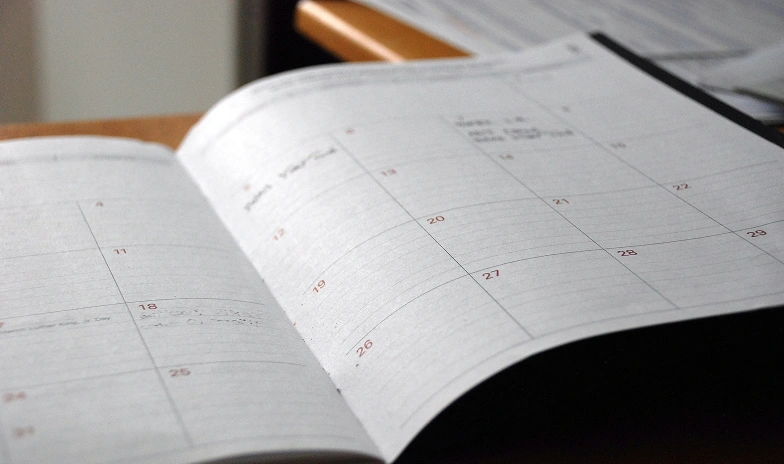
The to-do list was never going to end
In order to most fully inhabit the only life you ever get, you have to refrain from using every spare hour for personal growth.
— Oliver Burkeman, Four Thousand Weeks
Let’s address the blunt math that Burkeman shares in his book. If you live to eighty, you get about four thousand weeks. That’s it. With that in mind, his argument is that most modern productivity advice makes people feel worse, not better. It implicitly promises that if you’re efficient enough, you’ll eventually get on top of everything. But that promise itself is the problem.
Basically, productivity becomes a trap that speeds up the treadmill instead of stopping it. Burkeman describes his own experience of becoming extremely good at Inbox Zero, only to discover that it generated more email. Getting better at clearing tasks usually backfires, increasing the number you’re offered.
We don’t have to strive to fit everything in but to consciously choose what to neglect. Since time is finite, you’ll surely miss out on something, so the only real choice is which things you miss out on deliberately.

Why I think you should read both books
As an AdvanceMe editor, I read a lot of nonfiction, especially on personal development. Because of this focus, many of the ideas shared in self-help books may seem somewhat obvious to me. But these two titles stood out in particular and had a positive impact on my day-to-day life.
Despite their different starting points, both books reach a few similar conclusions. First, they both agree that constant connectivity distorts time. Second, they demonstrate that ownership is more important than any particular method. Both authors call for accepting your limits and choosing deliberately within them.
Taken alone, Vanderkam’s method runs the risk of becoming just another kind of self-optimization. And Burkeman’s approach, taken alone, can feel bracing in the moment and a little abstract by Tuesday morning, when I still have an inbox to deal with.
What’s worked for me is using Vanderkam’s tools in service of Burkeman’s mindset. For instance, I now track my time, but only to see clearly what I’m actually choosing to neglect. I also try to build in novelty because attention is what makes any given week feel like it happened at all.

The approaches by Vanderkam and Burkeman have helped me to build a healthier perception of time. I hope that you’ll find their insights valuable, but I would also encourage you to look for other takes on time. You can browse our list of books on time-management skills to discover something that might work better for you personally.
Credentials: