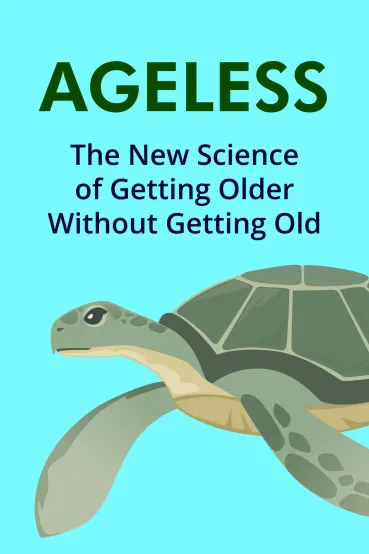
Ageless
Brief Summary
“Ageless” by Andrew Steele demonstrates the impressive progress of science in preventing aging. Living long without diseases is possible thanks to new methods developed by researchers. If you’re curious about the aging process and how we can influence it, you’ll find this book valuable.
Key points
Key idea 1 of 9
Modern life seems so ordinary to us. But about 25 thousand years ago, a typical day consisted of hunting wild animals or lighting a fire for warmth. Attacks by predators or illness in young people were expected. People did not live long, and mortality rates were alarmingly high, including the frequent deaths in childhood. Statistics showed that out of five children, only three survived. Surviving your teenage years meant you could live to old age, at least 50 or 60.
The question of life and death became a relevant topic for philosophers. As an example, Socrates wrote a lot about the aging of people and the end of life. Years went by, and life expectancy remained low. Such a situation greatly influenced people's perception of the world.
The 19th century gave good results thanks to global development. Thus, due to scientific progress, infectious diseases ceased to be a large-scale problem. The first vaccines appeared, and global sanitation was no longer challenging. In the 20th century, it helped raise the living standard in many leading countries. Then, in the late 1900s, the healthcare sphere brought positive results. People began thinking more about their health. That's why they gave up bad habits and started a more conscious way of life.
Developing countries have shown remarkable progress. If we compare the current situation with the indicators of the 20th century, life expectancy has almost doubled since then. In the mid-1900s, many people in India lived up to about 40, but this number went up to 70. Developed countries such as Japan have a better situation. The average life expectancy there reached 80 years old. The reason is the improvement of the general citizens’ health indicators. Most live to a ripe old age without severe illnesses and disabilities.
Now, aging presents new challenges. With the changes in life expectancy, the system is no longer perfect. Today, most older people are still ready to stay afloat in their careers. So, it becomes necessary to break stereotypes about mandatory retirement. If a person is still full of energy even at 70, it is worth allowing them to work or study.
According to scientists, by 2050, one-sixth of the world's population will be people over the age of 65. That is why global changes in work and education systems could bring more benefits. People will be prepared for new career challenges and longer life expectancy. It will provide greater development and the ability to adapt to new conditions instead of retiring.
FAQ
You may also like these summaries