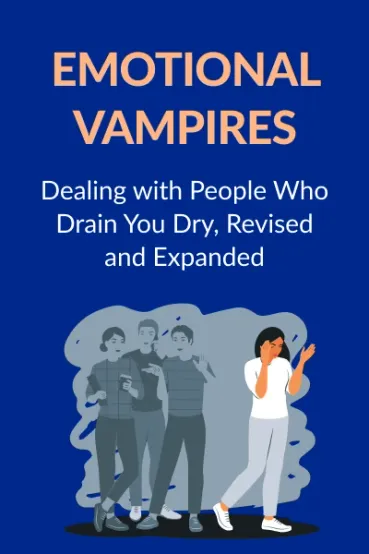
Emotional Vampires
Brief Summary
Have you ever felt drained after interacting with someone, but couldn’t pinpoint why? Chances are, you have encountered an emotional vampire — a term describing several personality types. Bernstein explores each type in detail, teaching you how to deal with these toxic people and protect your peace.
Key points
Key idea 1 of 7
When it comes to certain people, our interactions with them leave us feeling confused and frustrated. You keep asking yourself whether you’ve done something wrong unknowingly or if the person misunderstood you. At the same time, you feel drained, as if someone sucked the energy right out of your heart. More often than not, this means that you’ve come across an emotional vampire.
Psychologist Albert Bernstein coined the term “emotional vampire” to describe individuals whose personality patterns are draining to others. Emotional vampires aren’t easy to spot when you meet them for the first time. Some are charming and friendly — others pull you in with their manipulative skills. Their difficult tendencies pop up primarily under stress or when their deeper unconscious needs are threatened. The rest of the time, they can seem like the most engaging people you know.
Bernstein identifies five common types of emotional vampires: Antisocial, Histrionic, Narcissistic, Obsessive-Compulsive, and Paranoid. Why these five? This classification is rooted in what the Diagnostic and Statistical Manual of the American Psychiatric Association defines as personality disorders. People who show strong tendencies toward these patterns don’t necessarily meet the full clinical criteria for a diagnosis.
The way emotional vampires act is no coincidence. Each type is driven by a specific, childlike need that the vampire treats as the most important thing in the world. Some crave excitement or attention. Others seek control or certainty. Defining what drives a particular person is the key to understanding their behavior. Only then will you be able to protect yourself from their influence.
With all that in mind, we shouldn’t try to demonize emotional vampires or judge them too harshly. Essentially, these people behave kind of like children. They lack emotional maturity, so they are manipulating their environment to satisfy their childish needs. How should we respond, then? The strategies that work best with difficult children, such as clear boundaries and consistent consequences, work here as well. You’ll need knowledge, firmness, and the willingness to protect your own emotional resources without guilt.
You may also like these summaries