Should We Eat Meat?
Brief Summary
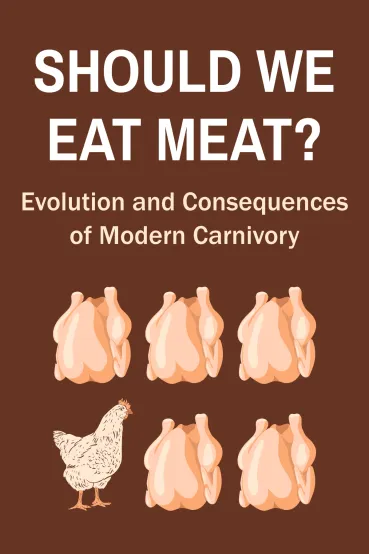
Should we eat meat? Keep reading to figure out why people started eating meat in the first place and how it affects the human body today. Also, look at the subject of eating meat from a healthy, ethical, and environmental perspective.
Key points
Key idea 1 of 8
Eating meat wasn’t an inherently human thing. Like many other species, early humans were plant-eaters, living on roots, nuts, and fruit. Around 2.6 million years ago, the dawn of the toolmaking revolutionized human life, allowing humans to hunt and diversify the foods they ate. From that point, they started to differentiate drastically from the other primates. As meat became a part of the diet, protein intake increased. People also began to obtain other essential nutrients, mostly lacking in plant foods, such as long-chain fatty acids and docosahexaenoic acid (DHA). Switching to a meat-based diet changed human physiology and especially the size of the human brain.
The change in diet affected not only the human body but also lifestyle, habits, and capabilities. With meat, people started getting more calories and, therefore, more energy. This energy helped to hunt even more meat. Such a task is much harder to do alone than together, so people began to cooperate and share both the work and the catch, forming social groups in which people developed communication and learned how to share responsibilities. Thus, their cognitive abilities also expanded.
Although primates eat mostly plant food, adding a few insects to their diet, they may occasionally eat meat. However, these periods are brief and do not have the same effect on the body as they do in humans. Evolution takes ages, and the adjustments in the human brain, physiology, and social behavior didn’t occur overnight, but after prolonged periods of eating meat.
Overall, looking at the connection between the shift in diet and the adjustments in other areas of early humans’ lives, we can conclude that meat was indeed critical to evolution. The product itself stimulated the development of each person individually. The process of preying and eating influenced the social pattern and the further advancement of the human race. The connection between meat-eating and human development is undeniable, and so is the fact that it still affects our lives. What remains to be determined is whether it is as healthy for us now as it was millions of years ago.
You may also like these summaries