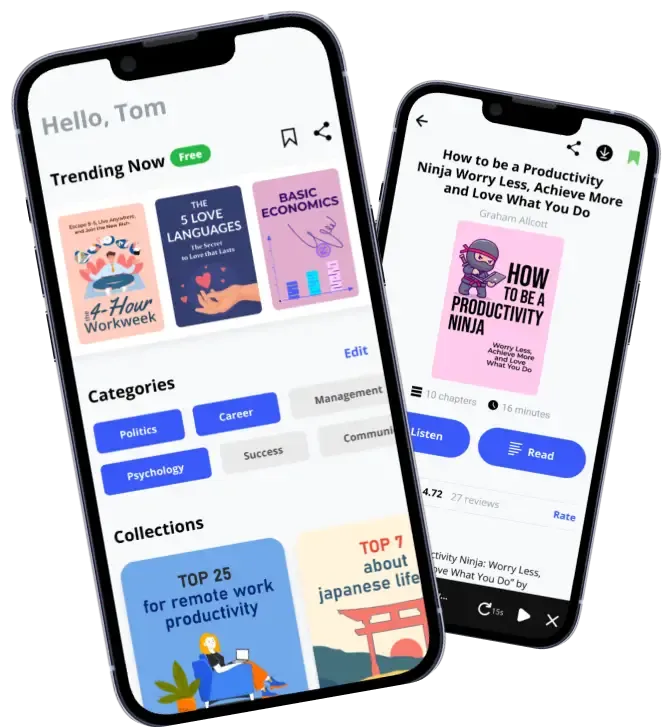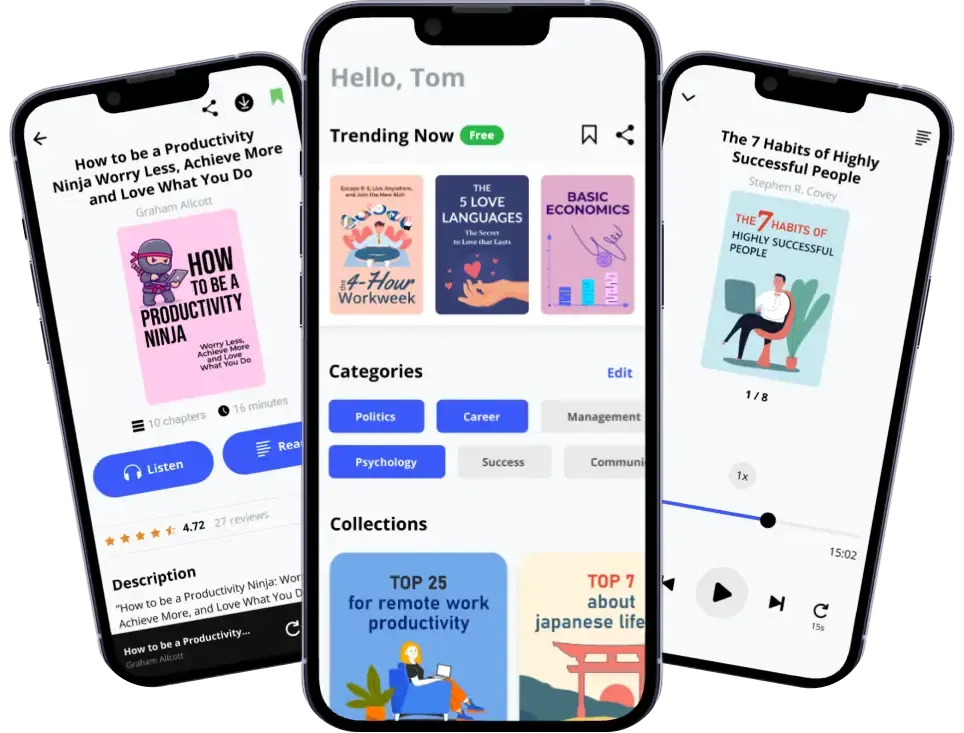
“I can’t learn English,” “I understand English, but can’t speak it,” “I have a problem memorizing English words.” Having said these or thought like that, you aren’t alone. But does it always need to be so challenging? What if there is a way to improve your English that tutors use themselves? We are talking about book summaries, both for reading and listening.
Why book summaries?
Let’s be real for a second. A lot of people start studying English by learning the grammar — present tenses, past tenses, conditionals, gerunds, the list goes on. And at one moment, you seem to know all the grammar, do the exercises perfectly, but still struggle with remembering words when you speak English or understanding what natives say.
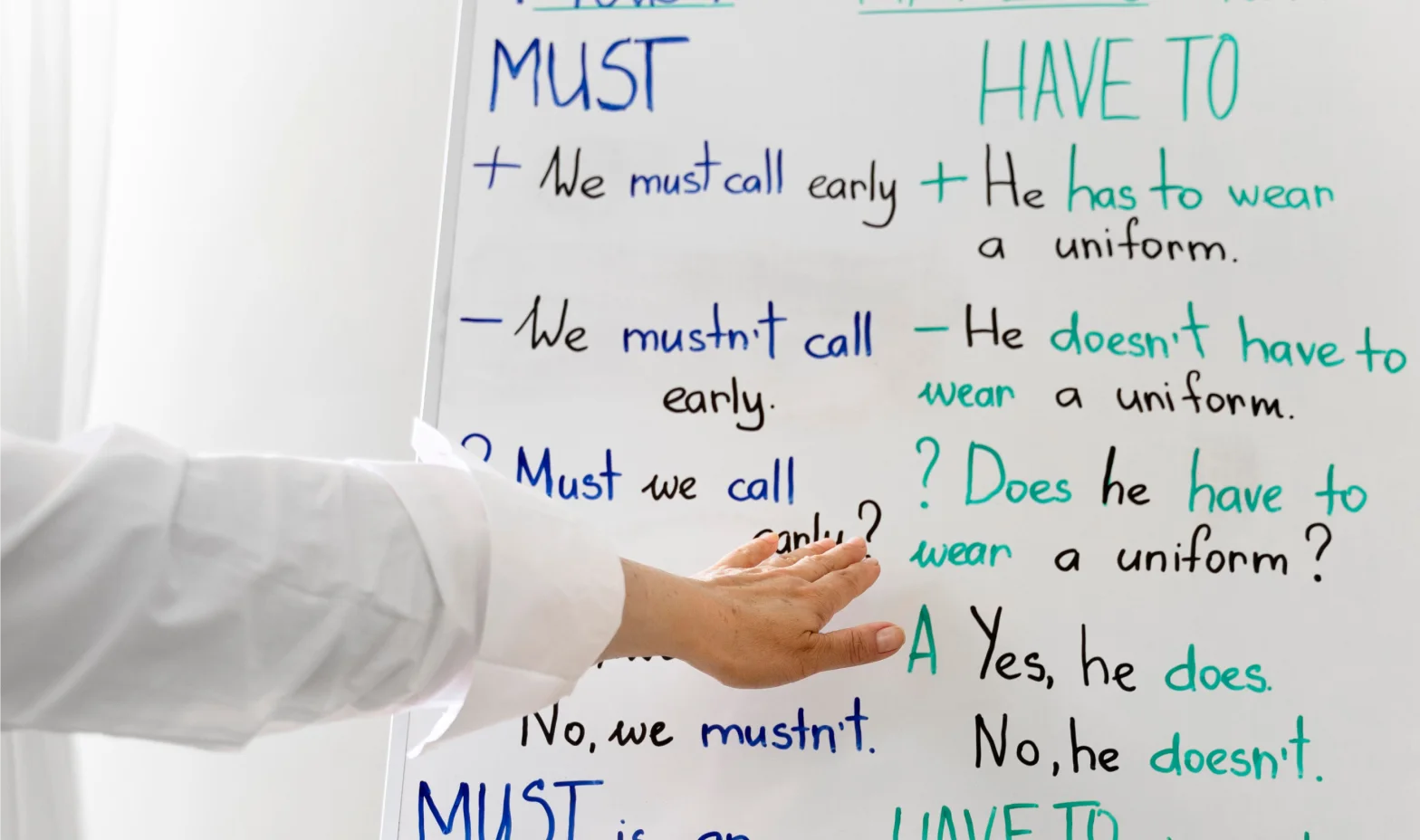
Reading and listening to book summaries is a good way to deal with these issues. We aren’t offering you a magic pill — surely, just reading or listening to one book summary won’t instantly improve your vocabulary so you could freely discuss the topics mentioned in the summary. You’ve got to understand that a book summary is just a tool, like your wordlist. But if used consistently, this has its benefits:
- Length. You know you should read more in English. Everyone says so. A short book summary gives you an opportunity to really do it and not feel guilty about quitting in the middle.
- Well-structured key ideas. With a good book summary, you not only learn English but also understand the essence of the book and get smarter in different topics.
- Audio version. Not all websites have book summaries for listening, but if you do find one, this is where you start, both learning the vocabulary and matching the word you see with how native speakers pronounce it.
Top 5 tips to study English with book summaries
If a book summary is just a tool, how can you use it the most efficiently? We’ll offer you some recommendations to do just that.
Select the right book summary
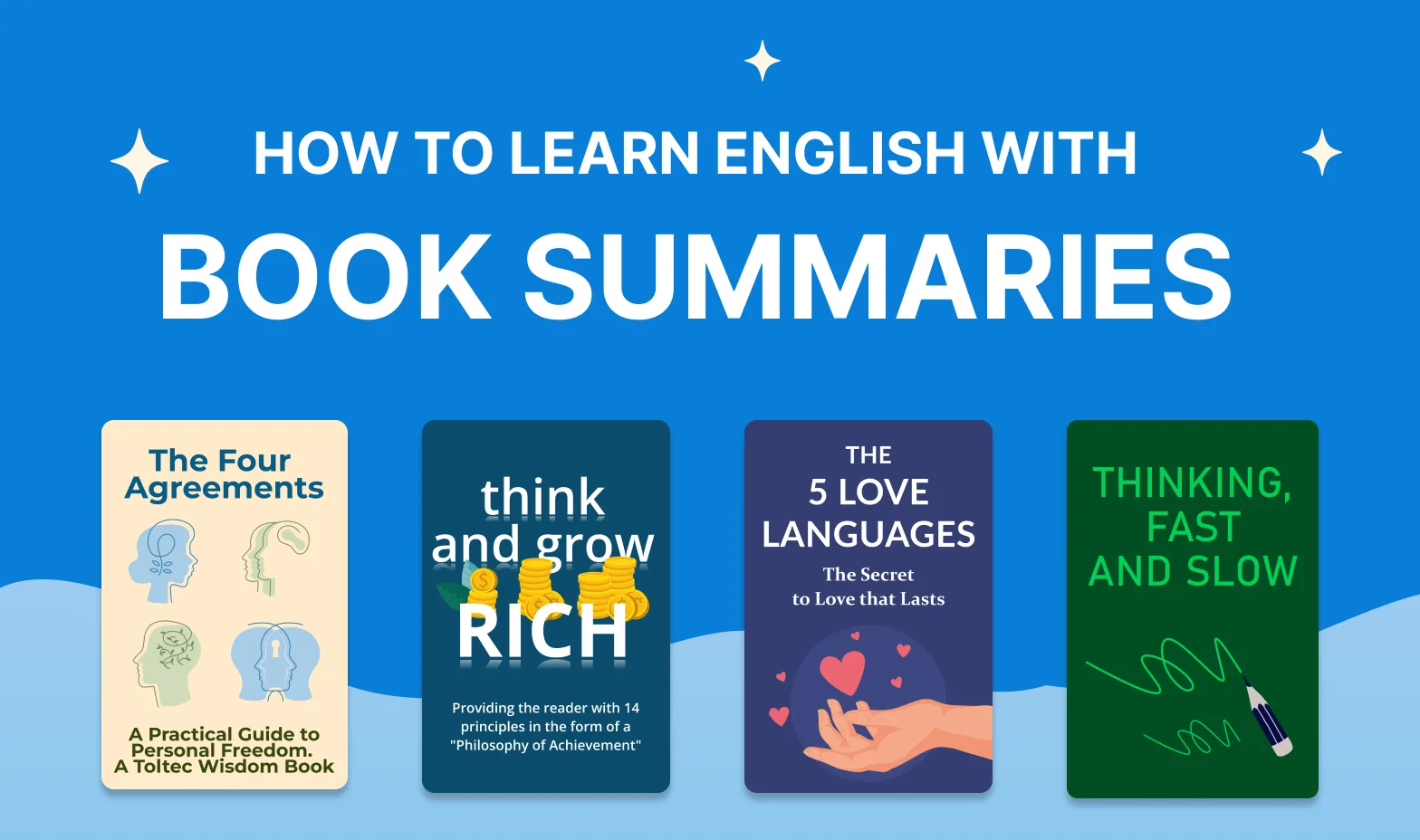
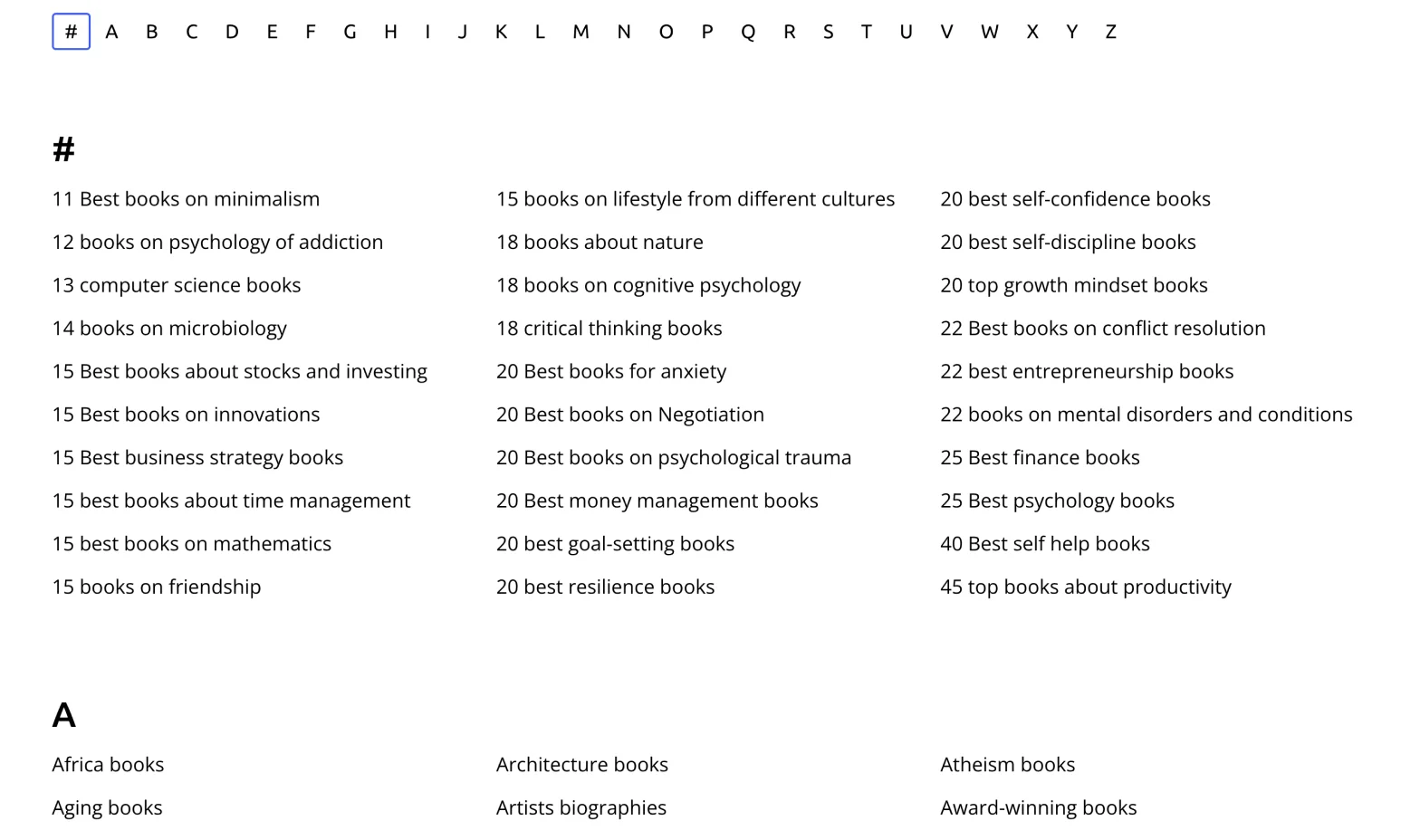
Just like books, book summaries have target audiences. Which summary should you focus on? Start by asking yourself three honest questions: “What is this book actually about”? “Is the topic something I care about?” “What genre do I enjoy?” If the topic grabs you, you’ll be able to absorb much more! Here’s a selection of topics AdvanceMe offers for anyone looking to improve their English.
Another thing to consider is the difficulty level. Without a real English level test (not the one you took online in 10 minutes), it’s pretty hard to assess where you actually are right now. There are three ways to deal with this problem:
- Start with something easy. If you’re into fiction, find some story-driven book summaries. These are fun, clear, and not going to bombard you with obscure vocabulary every other sentence. If you’re interested in non-fiction, choose some self-help book summaries to begin with. They are practical and include a lot of everyday words. Our article 10 Books to Transform Your ENGLISH FLUENCY and Your Life can help you with it.
- Pick a summary of a book you’ve read in your native language. When you already know the plot, your brain isn’t working overtime to follow the story — it can focus entirely on the language itself.
- Experiment with different summaries. Many websites and apps offer free chapters to read and listen to. This way, you can check out if the summary is to your taste and suits your language level.
Building a deliberate study routine
Picking great material is step one. But without a routine, even the best resources collect digital dust. Take it from Stephen Guise, the author of Mini Habits: “Small steps work every time, and habits are built by consistency, so the two were meant to be together.”
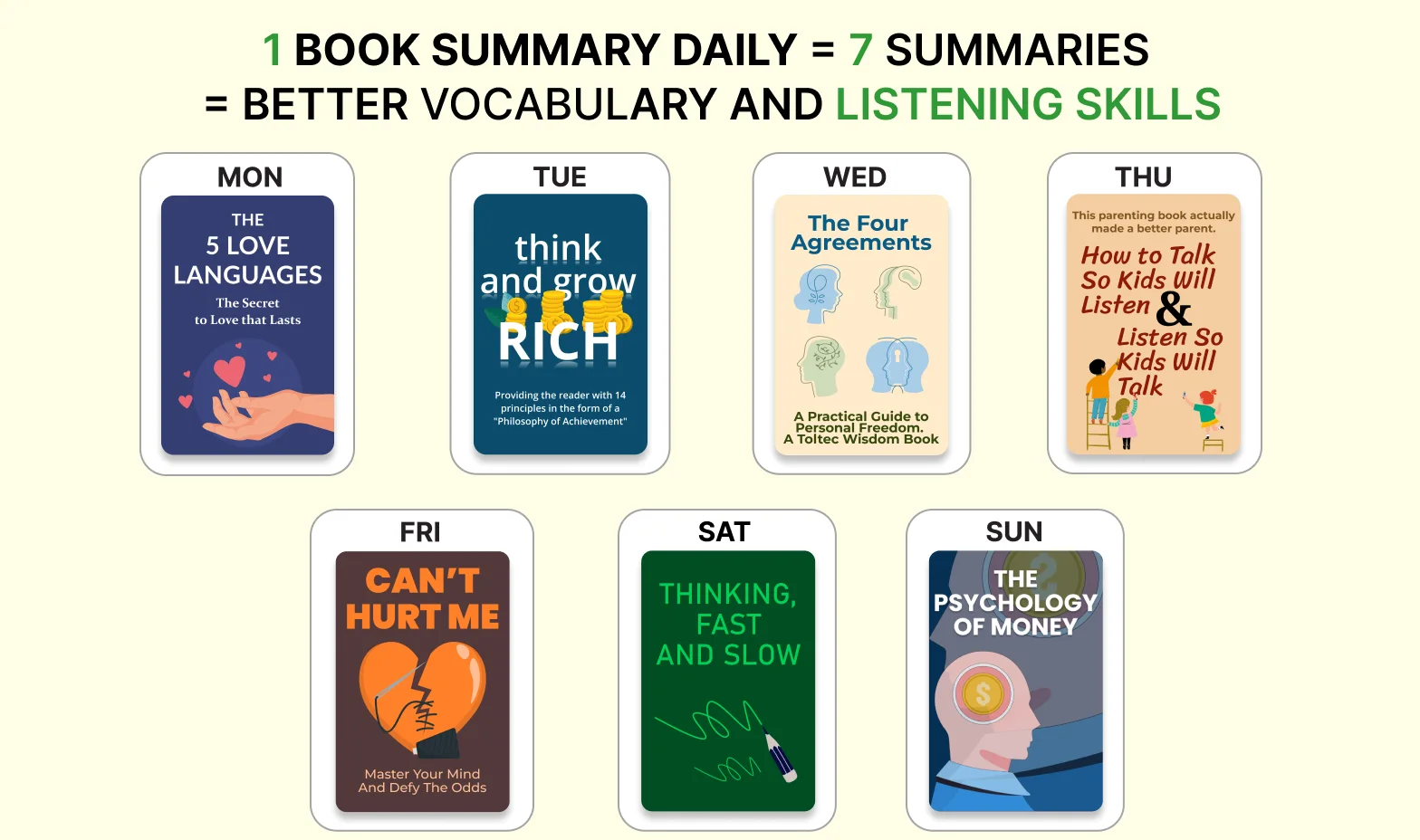
Today, you can find book summaries that take only 10 minutes of your time. If you make a small step every day and read a book summary, you build a habit. It doesn’t matter if you do it at the same time each day or at a different time. Just do it regularly, be it in the morning on your way to work or in the evening before bed. Read at a comfortable pace, but push yourself slightly. If everything feels too easy, you’re probably not learning much.
Try combining your reading with listening whenever you can. Many book summaries are available in audio format to help you study in a “listen-read-listen” cycle. First time, you listen to a passage to catch the overall sound and flow, then read it aloud yourself, and finally listen again and follow the text. Of course, it’ll take more than 10 minutes in the end, but you can divide this process into three studying sessions. One session – one day.
Make passive reading and listening active
Reading and listening are relatively passive activities, and recommending you just to read and listen to book summaries is like learning grammar rules without looking at examples. To really lock in what you’re learning, you need to get active.
One popular technique for English-speaking practice is shadowing. It is when you listen to a book summary and shadow a native speaker. Pay close attention to how the narrator connects words (connected speech practice), how some sounds are softened or blended (assimilation practice), and how the rhythm of each sentence flows naturally from one word to the next (intonation practice). This is what separates a learner who sounds rehearsed from one who sounds genuinely fluent. To get fluent in English as well as topics you like, take our quiz and get a personal book summary plan to make your shadowing even more beneficial.
To take it even further, record yourself. It may feel awkward at first, but once you get used to it, you will notice not only how strange your voice sounds on a recording, but also the flaws of your speech. If a particular sentence trips you up, don’t skip it. Stop, slow it down, say it out loud several times, and only move on once it starts to feel natural.
Learn words and phrases in context
Perhaps you’ve tried some apps that offer you a list of words that you can practice, and after some time, you have the vocabulary of a native speaker, but can’t use it properly in speech or writing. When you work with book summaries, this problem can also arise. We generally know from school that when we see an unfamiliar word, we have to write it down, translate, and in some cases, we even learn it. However, at the end of the day, this word still remains in our passive vocabulary (words that we understand but don’t use).
The best way to actually use the words from book summaries you read is to learn them in context and practice in speaking. You can do it during the “read” part of the “listen-read-listen” cycle or after shadowing; it’s up to you.
When you come across a new word or phrase, don’t just highlight the word itself — highlight the entire sentence around it. That sentence is what gives the word its life, showing you not just what it means but how it’s actually used. Pay special attention to collocations, like “make a decision” instead of “do a decision,” or “deliberate decision” rather than “on purpose decision.”
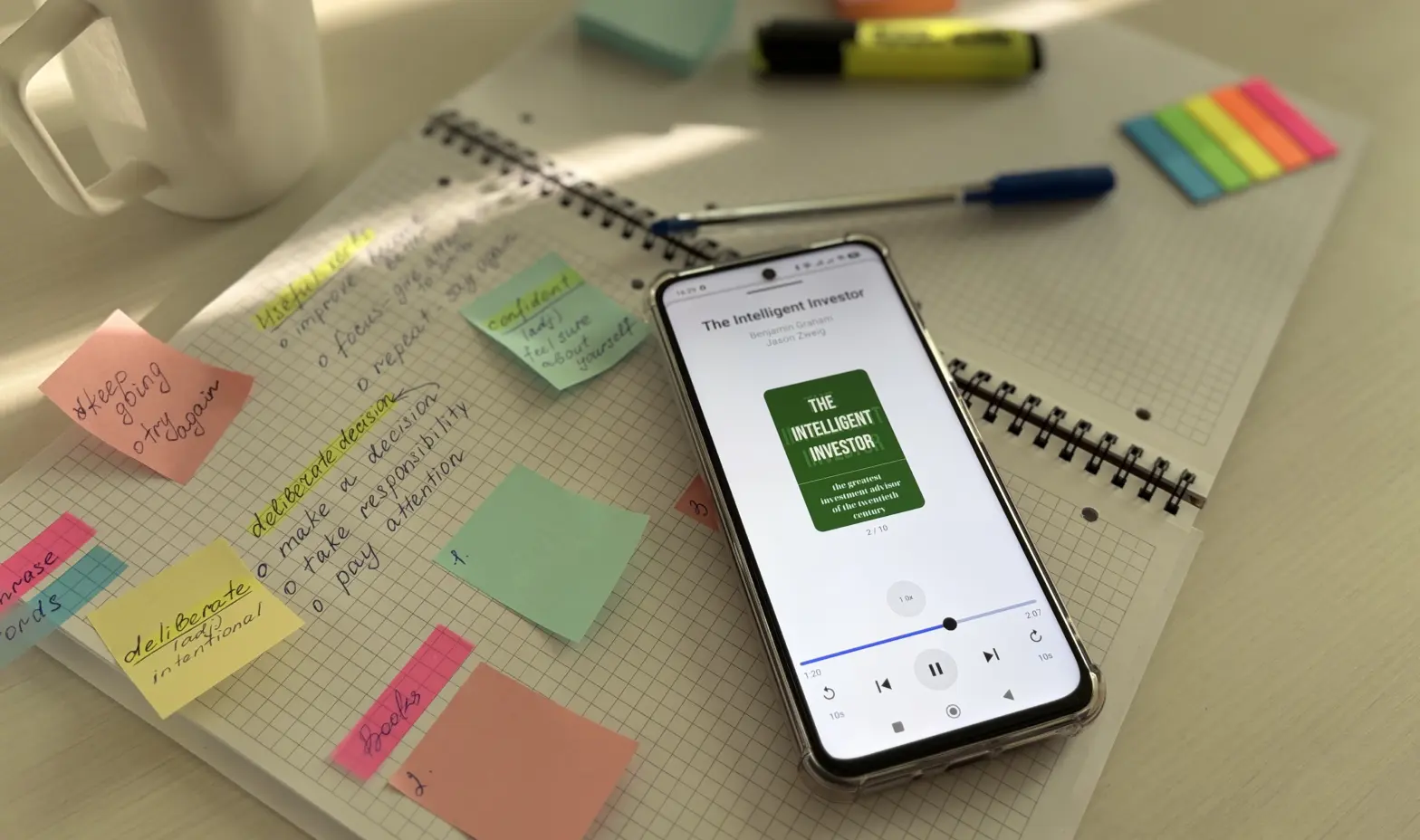
After your reading session, go back to what you’ve highlighted. Look things up, think about them, and add them to a dedicated vocabulary notebook. Better yet, use a spaced repetition app like Quizlet to schedule regular review. When you already know the translations and the meanings of this vocabulary, use it. Challenge yourself to bring a new word or phrase into a real conversation that same day, even if it feels a little forced at first.
If you don’t live in an English-speaking environment, use AI. Simple ChatGPT request: “Generate a few speaking exercises to practice these words: …” If you know your level, mention it in the request. Try different exercises, including completing the sentence, questions for discussion, creating a story, etc. Moreover, today, there are a lot of AI agents that you can talk to and practice new vocabulary. That’s how vocabulary moves from “passive” to “active.”
Revise what you’ve learned
Imagine you find the genre you like, read or listen to one book summary every day, then do shadowing, record yourself, and even practice vocabulary in context, but two weeks later, you still don’t use the words from the first summary you read. It is similar to how you show your parents the way to share a link with you. When you are nearby and help with advice, it seems they understand everything. A week passes, and they want to send you that funny cat video, but struggle to do it.
It’s not just what you know, but how you practice what you know that determines how well the learning serves you later.
— Peter C. Brown, Make It Stick
Each word you like and each phrase you find useful can become second nature only if you use them frequently on your own. So, before you read or listen to a new book summary, try recalling the main ideas from the previous one and use the new vocabulary you jotted down. Then, after working with the new summary, describe its gist using the phrases you learned in your last session. Repeat this sequence every time you study.
If that’s still not enough to help you remember and use new vocabulary, organize a revision session for yourself after every five book summaries you read.
Studying English isn’t a chore
You don’t need to struggle through long, complex texts to make real progress. In fact, book summaries offer a structured and highly practical way to develop your reading, listening, speaking, and vocabulary skills. The tips in this article aren’t a golden standard, but they can definitely improve your English learning process. The main thing is — don’t be too hard on yourself. What you don’t understand today may still be difficult tomorrow or the day after. But if you keep practicing, a week later it won’t seem like such a big deal anymore. Even though studying English is challenging, when you enjoy it, it becomes much easier and more fun.