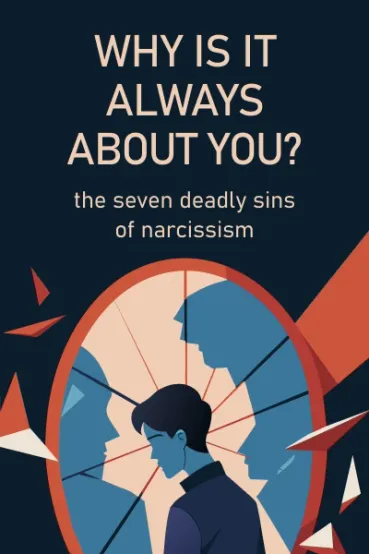
Why Is It Always About You?
Brief Summary
Unfortunately, narcissistic behavior is common — much more common than we’d like to think. Sandy Hotchkiss can help you better recognize narcissists, whether it’s your parent, boss, friend, or even romantic partner. You’ll be equipped with tools and strategies to interact with narcissistic people without harming yourself.
Key points
Key idea 1 of 7
When someone says “narcissism,” the implication is usually that the person is self-absorbed and egocentric. However, a healthy dose of it is actually essential for a fulfilling life. The situation is normal if you can maintain genuine self-esteem based on actual capabilities rather than inflated self-perception. But what does alarming narcissism look like? How is it different?
The main issue is the arrested emotional development. To put it simply, the narcissist is stuck at the emotional age of one to two years old. They don’t have a realistic sense of self and possess no internalized value system beyond pure self-interest. And because they are unable to assess themselves honestly, their exaggerated self-importance is unrelated to real accomplishments.
We all pass through a normal narcissistic stage in early childhood. It’s natural for a young child to feel as if the world is revolving around them. But while parents should nurture a child’s individuality, they also have to teach them values and respect for others. Of course, if the parents are narcissistic themselves, it becomes a serious problem (and creates a vicious cycle of narcissism passed down through generations).
How can you identify whether someone’s selfishness is healthy or narcissistic? Look at how they handle humbling moments in their lives. Can they tolerate being “good enough” and accept both their strengths and limitations? If so, then there is no need to raise red flags. However, when a person absolutely needs to feel superior and perfect all the time, if they keep denying their flaws or blaming others, those are the signs of narcissism.
It’s not that narcissistic individuals lack shame or self-control. Their relationship with shame is just really complicated. Even though their behavior can appear shameless, they are actually drowning in shame. What appears as grandiosity and arrogance is actually a front. This explains why narcissists react so explosively to even minor criticisms. Keeping this in mind helps us understand these individuals better.
You may also like these summaries