Cultish
Brief Summary
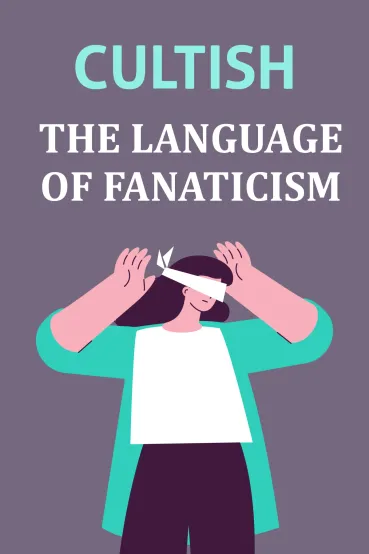
What connects religious, fitness, and marketing communities with cults? Amanda Montell proves that the use of specific vocabulary can influence our views and actions. “Cultish: The Language of Fanaticism” explores why people are drawn to joining groups and what makes cults so powerful.
Key points
Key idea 1 of 6
At thirteen, Tasha Samar learned about a yoga studio in Cambridge, Massachusetts, and her life changed. Considering Tasha’s challenges due to her ethnicity, she always remained in the shadows. As a Russian-American Jew, she never felt fully accepted by society. But in this new place, she finally felt a sense of unity with others thanks to the group called Healthy, Happy, Holy Organization, which is also called Sikh Dharma International.
This organization was established by Harbhajan Singh Khalsa, or Yogi Bhajan, in the 1970s. Its teachings of “science of the mind” intrigued Tasha and led to drastic changes. At 18, she moved to Los Angeles to become an instructor and devote her life to Sikh Dharma International. She succeeded, as many famous people came to her Kundalini yoga classes.
The rules of the community were quite harsh. Members had to take on new names and give up their own, so Tasha became Daya Kaur Khalsa. Besides this rule, people also followed New Age teachings. Meat and alcohol were forbidden, and all members had to undergo daily rituals. Such conditions often led to sudden weight loss and starvation, lack of sleep, and a general threat to life. Sikh Dharma International also promoted arranged marriages, which increased the risk of sexual violence and rape.
Like Tasha, Alyssa Clark, an 18-year-old girl, moved to LA and discovered the CrossFit gym. Although not considered a cult, it showed some cult-like qualities. The main trump card of this place was also unity in one goal: to change yourself and your body. Strict diets and various ways to progress in CrossFit became Alyssa’s way of life.
Yet, she noticed the other side of the coin. She encountered severe dependence on the coach’s opinion, physical overload, and endless training. Just as Tasha had to deal with strict rules that could lead to violence and moral exhaustion, Alyssa faced obstacles from belonging to a group.
At first glance, these stories may seem unrelated. Yet, we can see similarities if we look at the principles that hold such communities together. Why are they so appealing? It has to do with the language these communities and their leaders use. With the right words, cultish groups create a sense of belonging and control—something most of us desperately need.
FAQ
You may also like these summaries