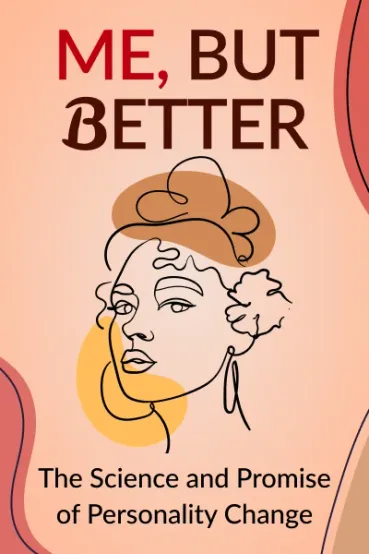
Me, But Better
Brief Summary
What if the parts of your personality you like least aren’t permanent? That’s the question journalist Olga Khazan asks and answers in “Me, But Better.” A growing body of personality science suggests that the self is far more malleable than we think. Essentially, who you are today is not a ceiling, but a starting point.
Key points
Key idea 1 of 6
Philosopher William James declared that “in most of us, by the age of 30, the character has set like plaster, and will never soften again.” Do you tend to believe that? If you do, you’re not alone — we’ve all fallen victim to this fallacy at some point. For decades, researchers followed this “plaster” hypothesis, believing that who you are by early adulthood is essentially who you’ll die as.
However, modern science proves that personality is a dynamic and living composition. Studies tracking participants for over fifty years have found that 98 percent of people change on at least one major personality trait by their sixties. Another found that personal transformation is often greater after thirty than it is before that age. Even William James himself transformed after thirty, recovering from depression and producing his most celebrated work in his forties.
This may sound like great news for those who feel imprisoned by their personality. This feeling is more common than we think. But fortunately, it’s within our power to improve who we are. A personality is not a life sentence, so the anxiety or the reflexive pessimism is not permanent. We can actually reshape the aforementioned plaster.
It’s helpful to think about two insights here. First of all, our personalities change through what researchers call social investment theory. As we take on new roles, we face new expectations and rise to meet them. You’ve probably seen this happening with the people you know. The party-loving twentysomething becomes the reliable manager. Or, for instance, a declared bachelor delivers vows. These situations occur because social environments sculpt us, and often, we don’t even notice it.
Secondly, consider the Buddhist concept of “no self.” It teaches that the ego is simply a pattern of habits rather than an unchanging essence. In other words, there is no fixed, essential you. Personality is simply what you do habitually and automatically. Because personality consists of daily thoughts and behaviors, changing those elements can change your life.
You may also like these summaries