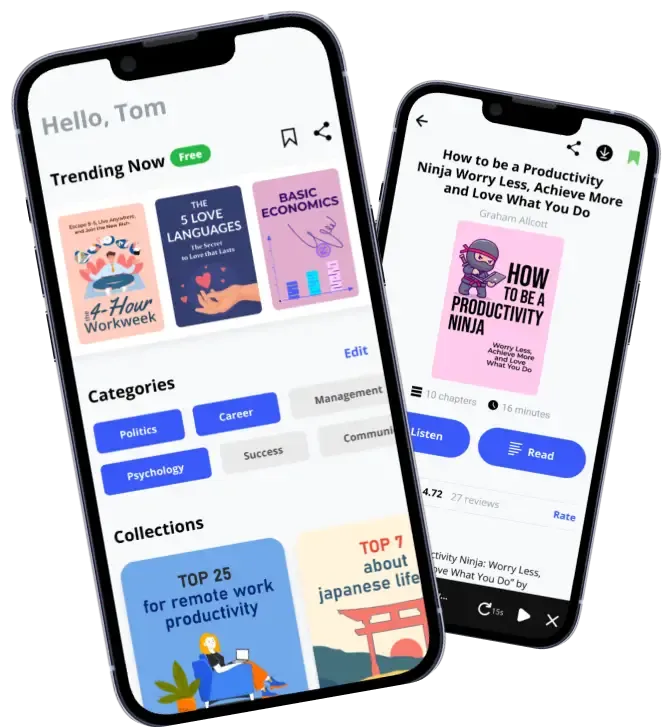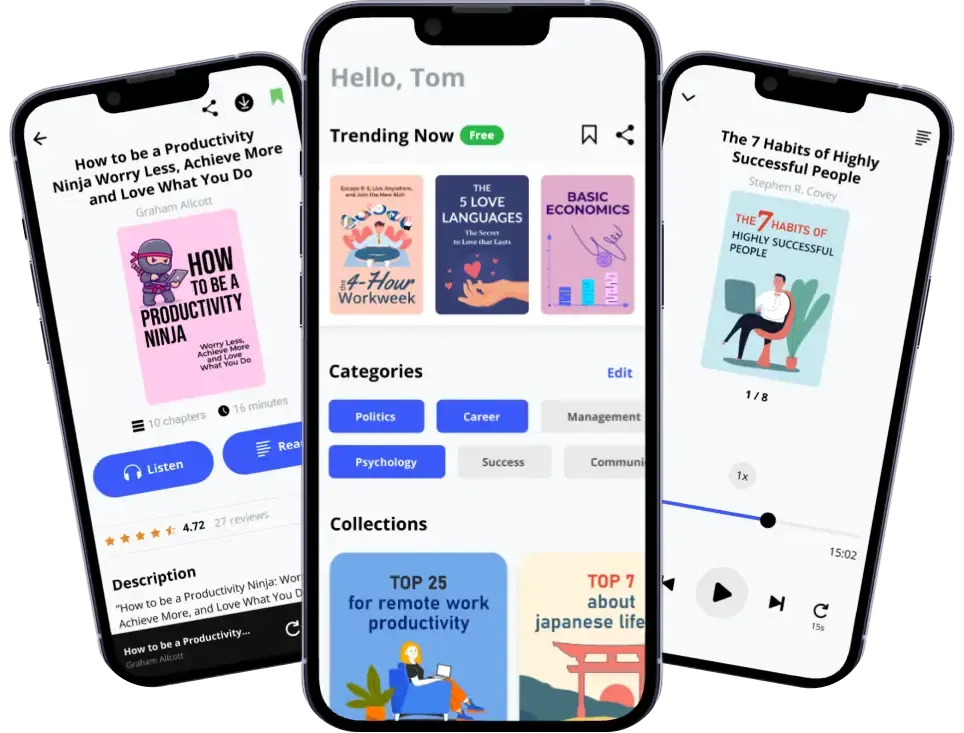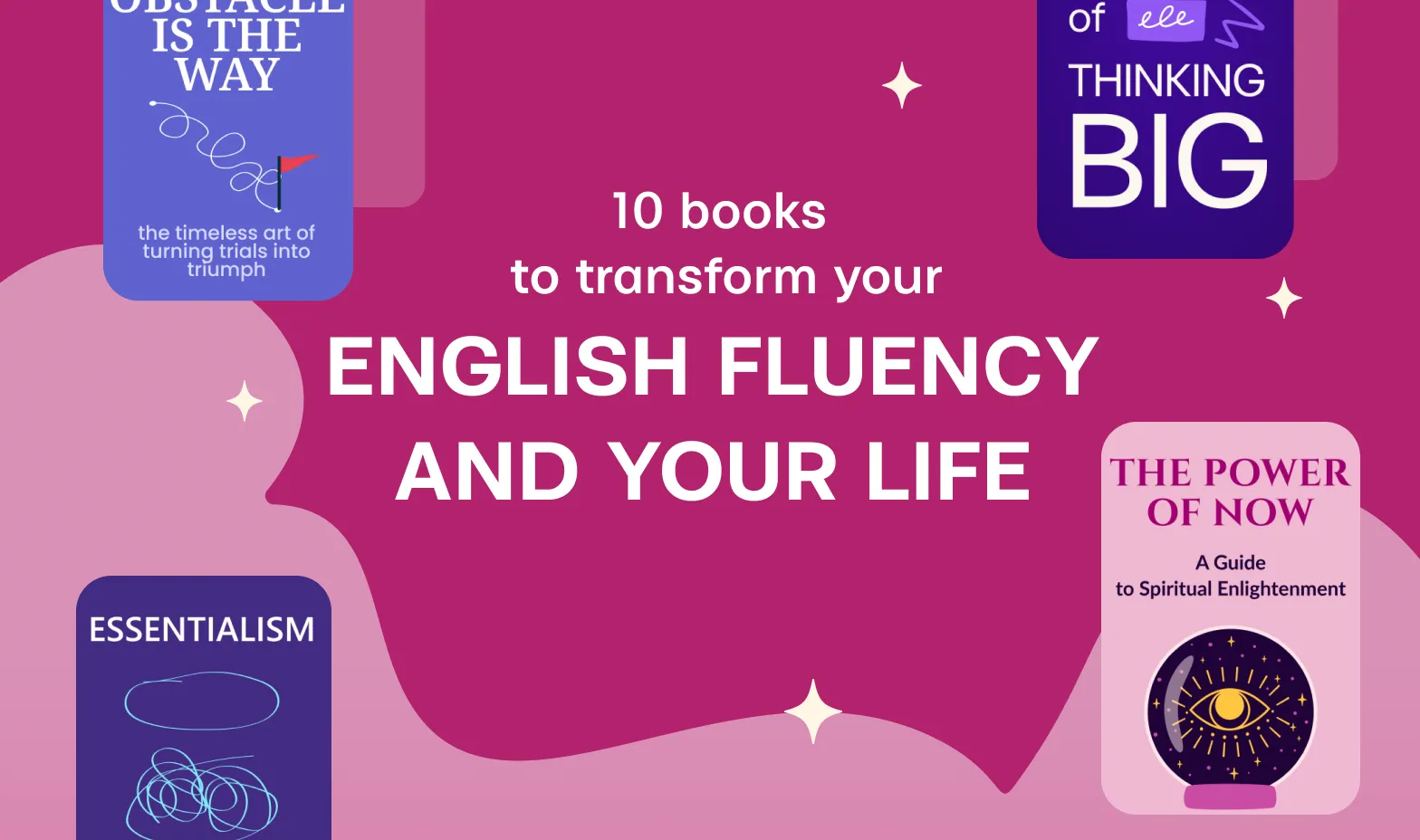
When people learn English, they use reading and listening as two fundamental practices. With our summaries, you can do both! Reading a text first gives you a mental map of the content, reducing cognitive overload. Hearing new words and structures pronounced and used in full sentences in the audio reinforces what you’ve learned. You won’t have to worry about how to expand your vocabulary and speak English confidently — it will happen naturally with practice!
A practical tip:
Try the shadowing techniqueusing our summaries. It’s really simple: listen to the audio and repeat what you hear. Your goal should be to mimic the pronunciation and rhythm as closely as possible. Start by reading the summary and listening through once for comprehension. On the second or third listen, speak along with the narrator in real time. You can also pause after each sentence and repeat it back, focusing on matching the stress and melody of the sentence.
1. “Atomic Habits” by James Clear
What is it about?
Atomic Habits is a modern classic of nonfiction — how could we not include it here? It’s insightful and beautifully simple, teaching you the science of how habits actually work.

Forget dramatic transformations and focus on getting just 1% better each day. Those tiny improvements compound like interest in a bank account, eventually leading to remarkable results. Habit formation comes down to four simple steps. Once you start practicing them, you can make good habits inevitable and bad habits nearly impossible. Our summary focuses only on the most practical and applicable tips of the book.

Why is this a good choice for English learners?
Atomic Habits is a good match for English learners because it helps you shift from “trying to learn English” to “being an English speaker.” It also has a logical structure (Problem → Explanation → Example → Conclusion), useful academic vocabulary (“consequently”, “as a result”, “this leads to”, etc.), and essential phrases and constructions about discipline and motivation.
2. “Educated” by Tara Westover
What is it about?
This book is about self-invention and how learning doesn’t just give you knowledge, but can also change who you are and what you believe.

Educated tells the true story of Tara Westover, who grew up in the mountains of Idaho without ever setting foot in a classroom. Her survivalist parents distrusted education, thus Tara and her siblings had to teach themselves whatever they could. Against all odds, she educated herself enough to get into college, then kept going until she earned a Ph.D. from Cambridge University.

Why is this a good choice for English learners?
Tara’s story is a story about learning. That’s why it can motivate language learners by demonstrating how perseverance can lead to breakthroughs. Some topics are heavy (like anti-science or ideological beliefs), but this will help you improve your reading comprehension as well as learn some phrases about rejection of education and medicine, academic opportunities, and self-study.
3. “Essentialism” by Greg McKeown
What is it about?
Ask yourself a simple but radical question: What if you stopped trying to do it all?
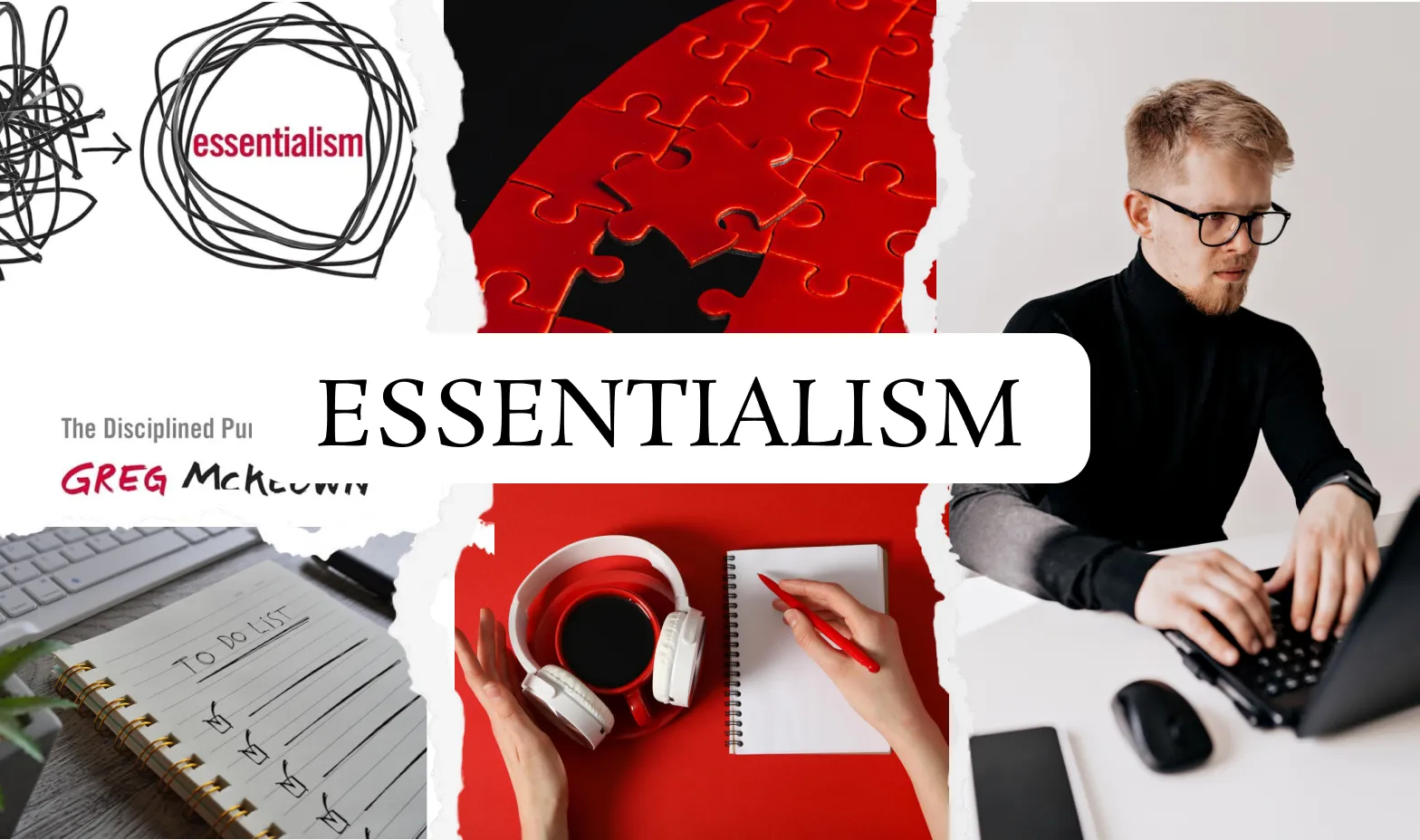
Author Greg McKeown argues that our obsession with doing more is actually making us less effective. He advises focusing on the vital few rather than the trivial many. This philosophy puts you back in control and lets you decide what deserves your time and energy. Less really can be more.
Why is this a good choice for English learners?
Learning a language can be overwhelming at times. You’ve got to learn vocabulary, understand grammar, speak, listen, read, and write... Essentialism teaches you to focus on high-impact activities rather than trying to do everything at once. Linguistically, it’ll help you build your vocabulary with terms like “counterproductive” or “leverage,” all common in professional contexts. The text is also full of natural idioms: “in a nutshell,” “stay afloat,” “own up to.” These phrases show you how native speakers express complex ideas.
4. “Why We Sleep” by Matthew Walker
What is it about?
The title basically gives it all away. This book encourages us to treat sleep not as an optional luxury but as a biological necessity. And it’s no wonder this book is a solid bestseller!

Neuroscientist Matthew Walker explains what sleep deprivation does to your brain and body. You get an inside look at what actually happens while you sleep. Walker also explains the science behind why you feel sleepy. Reading his tips will help you optimize sleep through environment and attitude changes.
Why is this a good choice for English learners?
English learners will find Why We Sleep useful because sleep directly affects learning. For example, if you’re studying vocabulary or grammar late into the night, you’re actually undermining your progress. Understanding this connection will allow you to study smarter. Reading topics like this one can be a great linguistic challenge because. Get out of your vocabulary comfort zone with scientific terms — “sleep deprivation,” “Rapid Eye Movement (REM) sleep,” “suprachiasmatic nucleus,” “metabolic rate,” and much more. What’s also cool is that Walker explains concepts in memorable language, making difficult science accessible and engaging.
5. “The Power of Now” by Eckhart Tolle
What is it about?
It’s so hard for many people now to just stop and take in the present moment. Tolle argues that most human suffering comes from living anywhere except the present moment.

The Power of Now can teach you how to break free from mental patterns that prevent peace. You’ll learn how to stop identifying with your thoughts and observe them like clouds passing in the sky. Shift your attention from your racing mind to your physical body and practice the state of alert presence. It sounds simple, but in fact requires a lot of practice (which pays off).

Why is this a good choice for English learners?
Many language learners have experienced that harsh inner voice criticizing their mistakes. “Why can’t I remember this word?” “My accent sounds terrible.” “I’ll never speak fluently.” Tolle’s strategies for quieting negative self-talk apply perfectly to the frustration and self-doubt that come with language learning. In addition to wisdom, you’ll gain new, unusual vocabulary, just to name a few: “the maze of our thoughts,” “ego’s whisper,” “cycle of regret and anxiety,” and “every moment is a stepping stone.” You will also find linguistic patterns for giving instructions and making recommendations in English (such as “Notice when…”, “Observe how…”, etc).
6. “How to Break Up with Your Phone” by Catherine Price
What is it about?
This book tackles smartphone addiction — a problem we all recognize. Catherine Price explains how our devices are engineered to be irresistible “digital candy stores.”

You’ll find a practical 30-day plan to reclaim your attention through mindfulness exercises and usage tracking. The goal is to start using technology deliberately rather than letting it use you. Read our summary to get the details!
Why is this a good choice for English learners?
Learners will find the book’s content valuable because it’s immediately relevant. When you’re trying to focus on language learning, digital distractions may become even more disruptive. This summary will teach you how to avoid that and stick to your good habits. It will also provide conversational phrases that you can use in everyday situations, like “Sounds familiar?” “Welcome to the club,” “Guess what?” “Here’s the catch,” etc.Additionally, you’ll absorb vivid metaphors that native speakers use to make abstract concepts memorable (“Dopamine hit,” “Info avalanches,” “Digital adventure,” the list goes on).
7. “Born a Crime” by Trevor Noah
What is it about?
Trevor Noah writes about growing up in South Africa during and after apartheid. Noah’s very existence was illegal, since he was born to a black mother and white father when interracial relationships were criminal. He himself was a “silent protest” against the regime.

Trevor had to deal with impossible racial categories, being too black for white society and simultaneously too white for black communities. He managed to overcome many hardships in a world that had no place for him.

Why is this a good choice for English learners?
Teachers commonly assign Trevor Noah’s book as required reading for introductory English and college-level courses. For learners, this book is an example of how language itself can be a tool for survival. Noah’s writing is also very accessible. The story flows logically, and the vivid metaphors help make abstract concepts more real. For instance, Noah described his mother as a “beacon of hope.” Such vocabulary teaches students how to use figurative English to relay emotional concepts.
8. “The Magic of Thinking Big” by David Schwartz
What is it about?
The Magic of Thinking Big is a classic self-help book that argues that success depends only on the size of your ambitions and beliefs. Author David Schwartz urges readers to set ambitious goals and overcome self-sabotage.

In our summary, you’ll find practical strategies to rewire your thinking and transform your mind from a “thought factory” that produces fear and doubt into one that generates confidence and possibility. The core message is simple: thinking bigger leads to bigger results.
Why is this a good choice for English learners?
The author confronts psychological barriers that language learners also face daily. Schwartz advises us all to become “front seaters,” which is helpful for students anxious about using English. Even more interesting is that Schwartz directly teaches how to expand vocabulary. He recommends using more energizing words, such as “amazing” or “challenge,” in place of passive ones like “fine” or “problem.” You learn how to improve your everyday life and deal with your learning challenges, so it’s a win-win.
9. “The Happiness Project” by Gretchen Rubin
What is it about?
Gretchen Rubin decided to try a year-long experiment to become happier. On paper, things were great: she had a successful career, loving family, and comfortable life. But she found herself constantly irritable and unable to fully appreciate what she had.
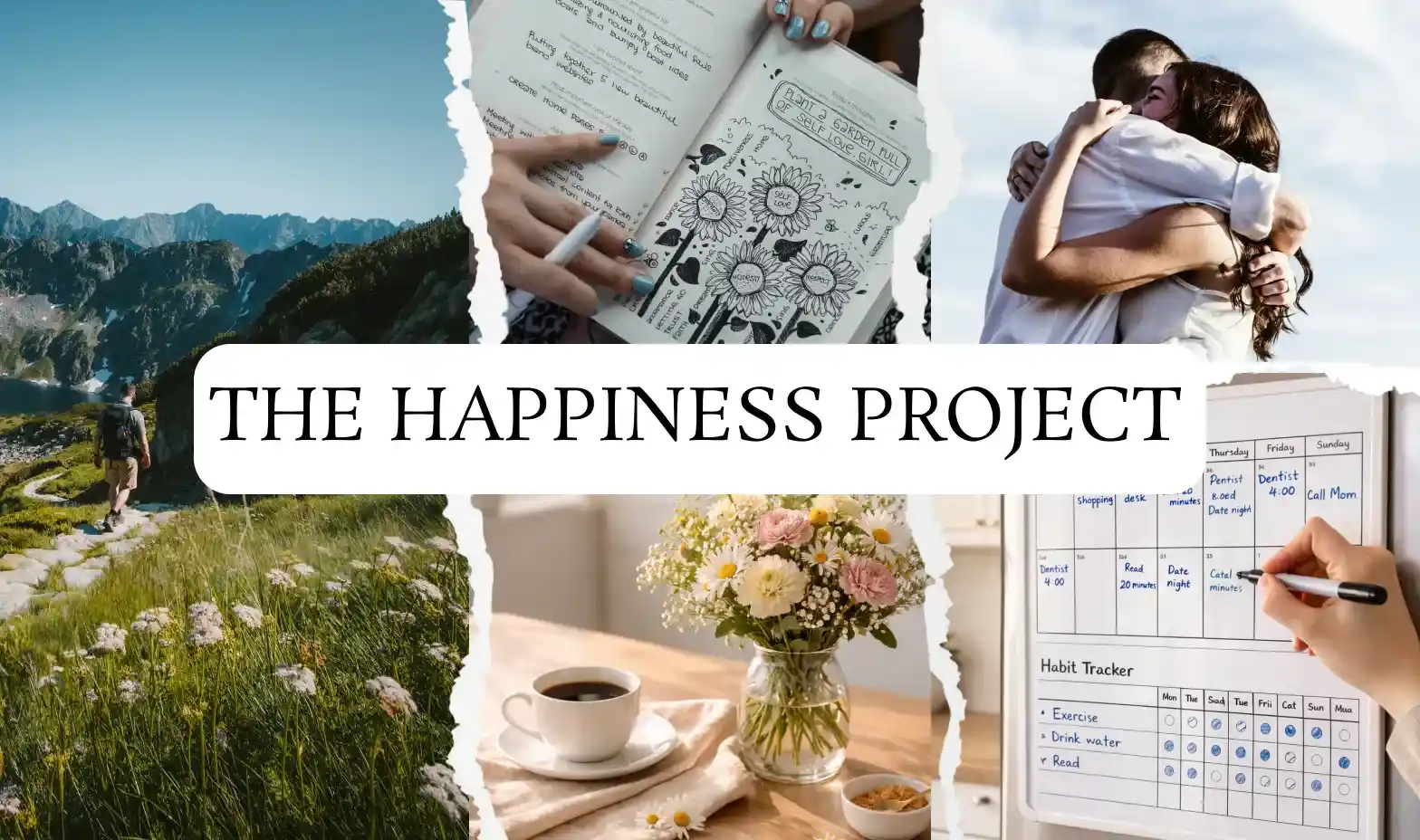
Her happiness project is inspired by Benjamin Franklin’s Virtues Chart, a list he used to improve himself and stay accountable. Rubin created a structured 12-month plan in which each month is dedicated to a different life area. For example, in February, Rubin focused on breathing new life into her marriage.
Why is this a good choice for English learners?
Firstly, the monthly themes of the book can be something that learners can adapt. Who says you can’t dedicate February to English conversation practice or March to reading? Also, because Rubin’s “resolutions” are specific and actionable commitments, they can teach you how to set effective language learning goals.
When reading or listening to the summary, you’ll gain well-rounded everyday vocabulary to discuss different aspects of life. The personal, diary-like tone also introduces you to a first-person narrative, useful for discussing your own experiences in English.

10. “The Obstacle Is the Way” by Ryan Holiday
What is it about?
This book draws on the ancient wisdom of Stoic philosophers and illustrates these principles with examples. Ryan Holiday encourages us to view the barriers blocking our way not as problems to solve, but as the actual path forward.

The Obstacle Is the Way is organized around three Stoic disciplines. Perception teaches you to see obstacles objectively. Action pushes you to respond creatively and adaptively and find unconventional routes when the direct path is blocked. Will is the internal fortitude to persist when action isnєt enough. Combine them together, and you’ll see how capable you actually are.
Why is this a good choice for English learners?
Any language learner knows there are many obstacles to fluency, whether it’s confusing grammar or feeling embarrassed by mistakes. Many learners catastrophize setbacks, but Holiday teaches you to see them neutrally, as information rather than judgment. You will learn a strong language for talking about character and difficulties in this context (“adversity,” “resilience,” “persist,” “adapt”). Holiday also frequently uses imperative sentences, such as “See clearly,” “Act boldly,” and “Endure,” that model how English speakers give advice and encouragement.
Feeling inspired already? Reading is the best way to enrich your mind with thematic vocabulary and achieve effortless fluency. To see even better results, combine it with listening to learn at a natural pace and pronunciation that no textbook can replicate. Try using AdvanceMe to get the most out of your English practice. When you’re done with a summary, look up any words you couldn’t grasp, and try to retell the chapter back to yourself in spoken or written English.