Anxiety at Work
Brief Summary
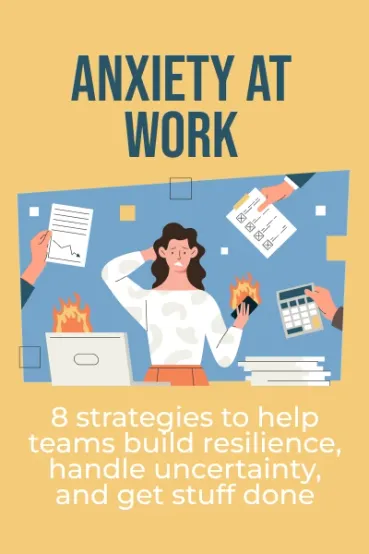
Our workplace environment has a significant impact on our mental well-being, especially in stressful situations. The anxiety may become so overbearing that it is impossible to do anything work-related. “Anxiety at Work” offers advice on regulating your emotions and finding effective ways to calm down, slow down, and tackle your to-do list.
Key points
Key idea 1 of 9
Unfortunately, work-related stress and anxiety are getting more and more common. A 2018 survey revealed that 34% of workers had felt anxious at least once in the previous month, and 18% suffered from a diagnosed anxiety disorder. But since many still feel uncomfortable discussing this, the issue persists, and employees keep their struggles firmly under wraps.
It’s a perfect illustration of the “duck syndrome” — appearing composed on the surface but paddling frantically below. People fear that acknowledging their vulnerability would harm their reputation in the workplace. After all, aren’t we all required to just “buck up” and keep hustling? However, this kind of thinking is exactly the reason the issue doesn’t go away.
Anxiety is not a plight of the weak or incapable ones, as many mistakenly believe. In fact, one study found that 86% of highly anxious individuals were rated as uniquely productive. Many highly capable and intelligent individuals experience anxiety, especially because they want to do their job well. Anxiety itself is not the root of the problem at the workplace. What’s the mastermind here is the culture that pressures people to act as though work-related anxiety doesn’t exist.
Leaders and managers can use several strategies to improve the situation. First of all, managers should step up as genuine allies rather than distant authority figures. They must show that they are emotionally available and ready for a deeper exchange than the perfunctory “How are you?” and “I’m fine.” When leaders share their own vulnerabilities, they give their teams tacit permission to do the same.
For example, Chris Rainey, co-founder and CEO of HR Leaders, hid his battle with anxiety from everyone, including his own wife. He changed his mind when he heard Tim Munden speak openly about his mental health struggles. Rainey felt able to do the same, and this lifted a huge weight off his shoulders. As a result, he became more mindful of his team members’ needs. The important lesson here is that when leaders build safer environments, the whole team performs better.
You may also like these summaries