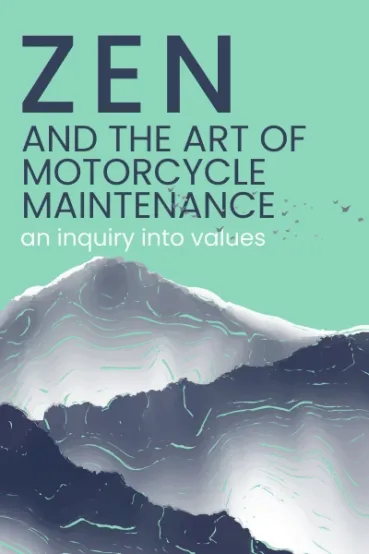
Zen and the Art of Motorcycle Maintenance
Brief Summary
“Zen and the Art of Motorcycle Maintenance” combines the practicalities of motorcycle upkeep with deep philosophical questions. It contrasts classical and romantic worldviews, using a cross-country motorcycle trip to explore human thought, quality, and values. This story transcends a simple travel tale, evolving into a quest for deeper understanding and self-discovery against the backdrop of the American landscape.
Key points
Key idea 1 of 9
Imagine this: a motorcycle journey, where stunning landscapes rush past and deep thoughts quietly settle in. Join a father, his son Chris, and their friends John and Sylvia as they ride together. Along the way, they don’t just travel through nature — they explore two different ways of seeing the world. One is romantic, full of feeling and beauty; the other is traditional, focused on reason and structure. Through their conversations and experiences, these worldviews slowly unfold. This road trip is a path toward understanding how we relate to life, technology, and ourselves.
On the one hand, there are John and Sylvia, who are typical romantic thinkers. For them, this journey is about the wind in their hair and the beauty of the landscape. The moment John’s motorcycle breaks down, he isn’t worried about how to fix it, but rather how the repair might alter the bike’s appearance. It illustrates well the idea that romantic thinkers prioritize feelings and experiences over technical details. For such people, the motorcycle is a work of art, not just a piece of machinery.
On the other side is the narrator, a classical thinker. When faced with the same broken motorcycle, his approach is different. He suggests using a piece of a beer can as a shim stock for a quick fix. Where John sees a blemish on his bike’s beauty, the narrator sees an efficient solution.
You can easily see the difference between these two thinking styles in your daily life. Take a leaky faucet at home, for example. A dripping faucet might annoy a romantic thinker. However, they’ll prioritize their home’s ambiance and comfort, ignoring the issue. Meanwhile, a classic thinker will see the drip as a problem to be solved.
Even if we travel the same road, the way we see it can be completely different. Traditional or classic thinkers find comfort in details, logic, and structure — they try to make sense of the world by breaking it down and organizing it. Romantic thinkers, on the other hand, embrace emotions, spontaneity, and the beauty of the unknown. Each view offers something valuable. When you start to see the strengths in both, your outlook becomes richer and more balanced. It’s not about choosing one side, but about finding harmony between reason and feeling. In the end, life becomes more meaningful when you learn to enjoy both the plan and the surprise.
You may also like these summaries