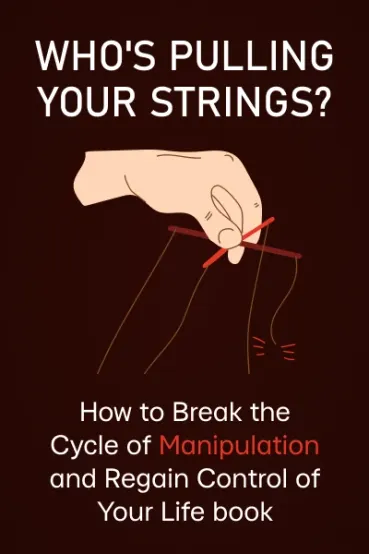
Who's Pulling Your Strings?
Brief Summary
Dr. Harriet B. Braiker shares practical advice for all of us who are tired of being manipulated. This book empowers you to be in charge of your emotional safety, helping you understand the tactics of manipulators. After reading “Who’s Pulling Your Strings?”, you’ll be able to escape the trap of manipulative relationships.
Key points
Key idea 1 of 6
Manipulation can be tricky to understand and identify. But even if you’re unsure whether you’re being manipulated, there’s always a feeling that something is not right. A victim of manipulation may not yet recognize the mechanisms, but they can sense the discomfort that accompanies it. Before examining the typical behaviors of manipulators, the first step is to become more self-aware.
Why? Because a manipulative relationship is rarely found in the manipulator alone. What’s typically happening is that there’s an interplay between a predator and a soft target. Depending on the situation, anyone can be manipulated. However, psychologist Harriet B. Braiker argues that the personality traits of some individuals invite exploitation. Manipulators push these buttons, these vulnerabilities that are often deeply ingrained habits and mindsets.
The most prominent button is what Braiker calls “the disease to please.” In this case, an individual’s self-esteem is tethered to how much they do for others. This is often paired with approval addiction, a person’s need to be liked by everyone to feel worthy. When approval feels necessary, a manipulator can easily control the victim by granting it and then threatening to withdraw it. Another critical vulnerability is emotophobia, or the excessive fear of negative emotions. A manipulator needs only to raise their voice to force immediate compliance.
If a person has an undefined sense of identity, manipulators project onto them whoever they need them to be. Then there are those with low self-reliance, who distrust their own judgment and depend on others to make decisions. The last button is an external locus of control. It is the belief that life happens to you rather than being shaped by you. This mindset fosters learned helplessness, making the victim believe there is nothing they can do to change their situation.
Did any of those seem familiar to you? Even if the answer is yes, don’t get discouraged because of your vulnerabilities. Instead, take that as a good sign because awareness is the first step to improvement.
You may also like these summaries